Grand Mufti of Saudi Arabia (since October 2025); member of the Council of Senior Scholars and the Permanent Committee for Scholarly Research and Ifta · b. 1935 · Saudi Arabia
Salih ibn Fawzan al-Fawzan (born 28 September 1935 in al-Shimasiyya, near Buraydah in al-Qasim) is a Saudi Salafi scholar who became the kingdom’s fourth Grand Mufti on 22 October 2025. He sits on the Council of Senior Scholars, the Permanent Committee for Scholarly Research and Ifta and the fiqh council of the Muslim World League, and answers listeners’ questions on the influential radio programme Nur ‘ala al-Darb. The Muslim 500, which has listed him every year since 2016, calls him the most senior scholar of the Salafi movement in Saudi Arabia. [1][2]
His father died when he was a child. After learning the Qur’an at the local mosque he studied at the College of Shari’a in Riyadh, where Ibn Baz taught him inheritance law, and took a master’s on inheritance and a doctorate on the rules of food in Islamic law. He then taught at the institutes and colleges of Imam Muhammad ibn Saud Islamic University. His more than thirty-five books include commentaries on Muhammad ibn ‘Abd al-Wahhab’s Kitab al-Tawhid, Thalathat al-usul and Masa’il al-Jahiliyya, and the legal handbook al-Mulakhkhas al-fiqhi. [1][2][3]
He has been criticised for several statements: in 2003 he was quoted as saying that “slavery is a part of Islam” and that those who deny it are not scholars; he has called public demonstrations forbidden; and in 2017 he was reported to have called Shi’i Muslims “brothers of Satan” and unbelievers, remarks cited as an example of sectarian rhetoric. His supporters say his views reflect traditional jurisprudence. [1]
The Muslim 500: The World’s 500 Most Influential Muslims, 2026 edition, Scholarly section (listed in the editions of 2016, 2017, 2018, 2019, 2020, 2021, 2022, 2023, 2024, 2025, 2026). Free PDF of the 2026 edition
“Ṣāliḥ ibn Fawzān Āl Fawzān”, works in Open Library. openlibrary.org
Primary sources: the Muslim 500 entries and the Wikipedia article. Archived copies: the Wikipedia article (Wayback Machine copy of 14 October 2026: web.archive.org).
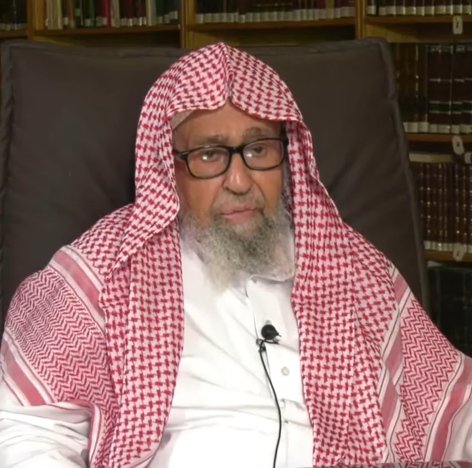
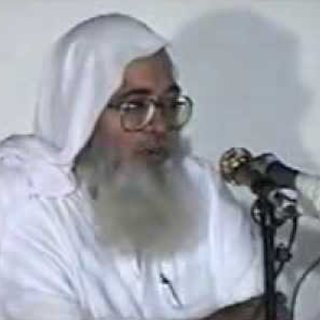
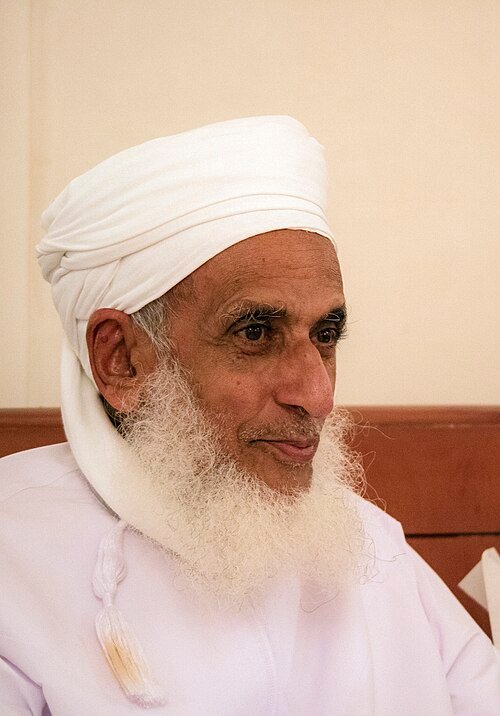
Photo: صالح الفوزان, CC BY 3.0, via Wikimedia Commons (File:Saleh Al-Fawzan.jpg).
Checked: 6 November 2026. Biography compiled and added to this archive: 6 November 2026.
al-Fawzan, Salih. Al-Irshad ila sahih al-i'tiqad. 1990. Archived 6 November 2026 in Islamic Internet Archives: Archive of Modern Islamic Thought. https://islamicarchives.org/works/salih-al-fawzan-al-irshad-ila-sahih-al-i-tiqad-ar/
al-Fawzan, Salih. Al-Mulakhkhas al-fiqhi. 1994. Archived 6 November 2026 in Islamic Internet Archives: Archive of Modern Islamic Thought. https://islamicarchives.org/works/salih-al-fawzan-al-mulakhkhas-al-fiqhi-ar/
al-Fawzan, Salih. Sharh Masa'il al-Jahiliyya. 2001. Archived 6 November 2026 in Islamic Internet Archives: Archive of Modern Islamic Thought. https://islamicarchives.org/works/salih-al-fawzan-sharh-masa-il-al-jahiliyya-ar/
Grand Mufti of Saudi Arabia (since October 2025); member of the Council of Senior Scholars and the Permanent Committee for Scholarly Research and Ifta · b. 1935 · Saudi Arabia
Known for: Grand Mufti of Saudi Arabia (since October 2025); member of the Council of Senior Scholars and the Permanent Committee for Scholarly Research and Ifta
Era: Revival & Independence (1947–1979); Global Islamic Resurgence (1979–2000); Contemporary Islam (2000–today)
Subjects: Philosophy and theology, Islamic law
Works in this archive: 3
Salih ibn Fawzan al-Fawzan (born 28 September 1935 in al-Shimasiyya, near Buraydah in al-Qasim) is a Saudi Salafi scholar who became the kingdom’s fourth Grand Mufti on 22 October 2025. He sits on the Council of Senior Scholars, the Permanent Committee for Scholarly Research and Ifta and the fiqh council of the Muslim World League, and answers listeners’ questions on the influential radio programme Nur ‘ala al-Darb. The Muslim 500, which has listed him every year since 2016, calls him the most senior scholar of the Salafi movement in Saudi Arabia. [1][2]
His father died when he was a child. After learning the Qur’an at the local mosque he studied at the College of Shari’a in Riyadh, where Ibn Baz taught him inheritance law, and took a master’s on inheritance and a doctorate on the rules of food in Islamic law. He then taught at the institutes and colleges of Imam Muhammad ibn Saud Islamic University. His more than thirty-five books include commentaries on Muhammad ibn ‘Abd al-Wahhab’s Kitab al-Tawhid, Thalathat al-usul and Masa’il al-Jahiliyya, and the legal handbook al-Mulakhkhas al-fiqhi. [1][2][3]
He has been criticised for several statements: in 2003 he was quoted as saying that “slavery is a part of Islam” and that those who deny it are not scholars; he has called public demonstrations forbidden; and in 2017 he was reported to have called Shi’i Muslims “brothers of Satan” and unbelievers, remarks cited as an example of sectarian rhetoric. His supporters say his views reflect traditional jurisprudence. [1]
The Muslim 500: The World’s 500 Most Influential Muslims, 2026 edition, Scholarly section (listed in the editions of 2016, 2017, 2018, 2019, 2020, 2021, 2022, 2023, 2024, 2025, 2026). Free PDF of the 2026 edition
“Ṣāliḥ ibn Fawzān Āl Fawzān”, works in Open Library. openlibrary.org
Primary sources: the Muslim 500 entries and the Wikipedia article. Archived copies: the Wikipedia article (Wayback Machine copy of 14 October 2026: web.archive.org).
Photo: صالح الفوزان, CC BY 3.0, via Wikimedia Commons (File:Saleh Al-Fawzan.jpg).
Checked: 6 November 2026. Biography compiled and added to this archive: 6 November 2026.