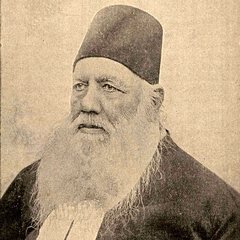
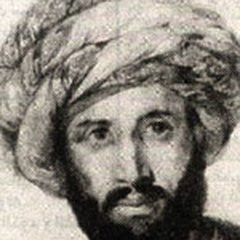
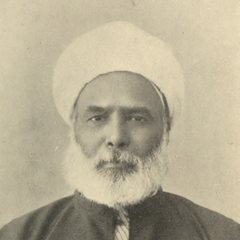
Rahmatullah Kairanawi
رحمت الله الكيرانوي
Scholar, author, educator · 1817–1891 · India, Saudi Arabia
At a glance
Full name: Muhammad Rahmatullah ibn Khalil al-Rahman al-Kairanawi al-Hindi al-Othmani
Also known as: Rahmatullah al-Hindi
Born: 1817, Kairana, Muzaffarnagar, Uttar Pradesh, India
Died: 1 May 1891, Mecca, Hejaz (aged 74)
Countries: India, Saudi Arabia
School or tradition: Sunni / Hanafi / Maturidi
Known for: Scholar, author, educator
Main interests: Islamic theology, comparative religion, polemics, education, medicine, mathematics
Institutions: Madrasah as-Sawlatiyah, Masjid-e-Haram
Notable works: Izhar ul-Haqq, debate with Karl Gottlieb Pfander
Era: Reform & Renewal (1850–1900)
Subjects: Philosophy and theology
Works in this archive: 1
Rahmatullah Kairanawi (1818–1891) was an Indian Sunni Muslim scholar and author best known for his polemical work Izhar ul-Haqq and his public debates with Christian missionaries. Following his participation in the Indian Rebellion of 1857, he emigrated to Mecca, where he founded the Madrasah as-Sawlatiyah [1] [2] [3].
Early life and education
Rahmatullah Kairanawi was born on 9 March 1818 in Kairana, near Muzaffarnagar, into a wealthy and distinguished family claiming descent from the third Caliph Uthman ibn Affan [1] [4] [2] [3]. He began his traditional Islamic education at age six under his father Khalil al-Rahman, memorising the Quran by age twelve and studying Arabic and Persian [1] [4] [2]. He later moved to Delhi, where he studied under scholars such as Muhammad Hayat and Imam Bakhsh Sahbai, and subsequently to Lucknow to study under Mufti Sadullah and physician Muhammad Faiz, acquiring knowledge in diverse disciplines including mathematics and medicine [1] [4] [5].
Career and activities
Kairanawi worked as a mufti and Sharia teacher, and founded an early religious school in his hometown of Kairana [1] [4] [2]. During the Indian Rebellion of 1857, he actively participated in armed uprisings and resistance efforts against British colonial rule alongside figures like Imadullah Muhajir Makki [1] [6] [2]. Following the British victory and the confiscation and auction of his property, he fled India, eventually travelling by foot and sea via Yemen to settle in Mecca [1] [4] [2]. In Mecca, he was appointed as a lecturer at the Masjid-e-Haram by Sheikh Ahmad Dahlan and subsequently founded the Madrasah as-Sawlatiyah in 1874 with the financial support of a benefactor named Sawlat-un-Nisa [1] [4] [6]. He maintained friendly relations with the Ottoman Sultans and travelled to Istanbul [6] [3]. Kairanawi died on 1 May 1891 in Mecca and was buried in Jannat al-Mu’alla [1] [3].
Thought and ideas
Kairanawi specialized in comparative religion and polemical discourse against Christian missionary activities, focusing on refuting Christian doctrines such as the Trinity and the divinity of Christ [6] [2] [3]. In his writings, most notably Izhar ul-Haqq, he utilized Western biblical criticism and historical arguments to contend that biblical texts had undergone alteration, corruption, and omission over time [1] [2]. His methodological approach served as an extensive compendium of arguments against Christian mission work and influenced later Muslim apologetics [1] [2] [3].
Controversies and criticism
Kairanawi was a prominent target of British colonial authorities due to his direct involvement in the leadership of the 1857 Indian Rebellion against British rule [4] [6] [2]. Following the suppression of the uprising, a bounty was placed on his head, his extensive family properties in Kairana were confiscated and auctioned, and he was forced into permanent exile [1] [4]. His theological debates with Christian missionary Karl Gottlieb Pfander also generated intense contemporary polemical contention between Christian and Muslim observers [1] [2] [3].
Major works
Kairanawi’s most significant and widely known work is Izhar ul-Haqq (Truth Revealed), originally written in Arabic in multiple volumes, which provides a comprehensive critique of Christian scriptures and doctrines using both traditional Islamic sources and Western biblical criticism [1] [6] [2]. Another notable work attributed to him is I’jaz-i Isawi [3].
Legacy and influence
Kairanawi is remembered as a pioneering figure in modern Islamic polemics against Christian missionary literature [6] [3]. His establishment of the Madrasah as-Sawlatiyah in Mecca created a lasting educational institution with influential alumni across the Islamic world [1] [4] [6]. His apologetic methodology and writings, particularly Izhar ul-Haqq, have continued to serve as reference works for later Muslim scholars and apologists, including Ahmed Deedat [1] [2] [3].
About this entry
- Prepared: with the archive’s AI author tool from the sources above, then reviewed by the editor before publishing.
- Primary source: “Rahmatullah Kairanawi.” Wikipedia (English) (no Wayback Machine snapshot was found).
- Checked: 29 October 2026. Biography compiled and added to this archive: 29 October 2026.
References
- “Rahmatullah Kairanawi.” Wikipedia (English). Accessed 29 October 2026. en.wikipedia.org/wiki/Rahmatullah_Kairanawi
- “Al Hindi.” Wikipedia (French). Accessed 29 October 2026. fr.wikipedia.org/wiki/Al_Hindi
- “Rahmatallāh al-Kairānawī.” Wikipedia (German). Accessed 29 October 2026. de.wikipedia.org/wiki/Rahmatall%C4%81h_al-Kair%C4%81naw%C…
- “رحمة الله الكيرانوي.” Wikipedia (Arabic). Accessed 29 October 2026. ar.wikipedia.org/wiki/%D8%B1%D8%AD%D9%85%D8%A9_%D8%A7%D9%…
- “রহমতুল্লাহ কিরানভি.” Wikipedia (Bengali). Accessed 29 October 2026. bn.wikipedia.org/wiki/%E0%A6%B0%E0%A6%B9%E0%A6%AE%E0%A6%A…
- “رحمت اللہ کیرانوی.” Wikipedia (Urdu). Accessed 29 October 2026. ur.wikipedia.org/wiki/%D8%B1%D8%AD%D9%85%D8%AA_%D8%A7%D9%…
Connections
Influenced
Works
See also
Same period
Same country
Same subjects
Same field
Archived 29 October 2026. Islamic Internet Archives, https://islamicarchives.org/authors/rahmatullah-kairanawi/