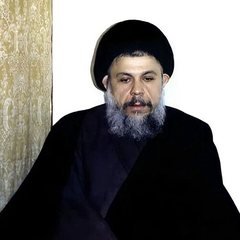
At a glance
Born: November 8, 1894, in Mahallat Diyai, Kafr al-Shaykh, Egypt [1] [2]
Died: January 1, 1958, in Lahore, Pakistan [1] [2]
Countries: Egypt
Known for: Quran scholar, Professor of Islamic studies, Islamic jurist
Education: Al-Azhar University; PhD from Sorbonne University (1947) [1] [2]
Era: Empire & Transition (1900–1924); Post-Caliphate Era (1924–1947); Revival & Independence (1947–1979)
Subjects: Qurʾānic studies, Sira and history, Philosophy and theology
Works in this archive: 3
Muhammad Abdallah Draz was a prominent Egyptian scholar and professor at Al-Azhar University who specialized in Quranic studies and moral philosophy [1]. He is noted for his academic work at the Sorbonne and his efforts to establish a systematic framework for Quranic ethics [2].
Early life and education
Muhammad Abdallah Draz was born in 1894 in the village of Mahallat Diyai in northern Egypt [1] [2]. His father, Abdullah Draz, was an Islamic scholar and linguist who wrote commentaries on the works of Al-Shatibi [2] [3]. Draz memorized the Quran by the age of ten [3]. In 1905, he enrolled in a religious institute in Alexandria affiliated with Al-Azhar [1] [2]. He earned his secondary certificate in 1912 and his higher degree (Alamiya) in 1916 [2] [3].
During the 1919 protests against British rule, Draz studied French to communicate the Egyptian cause to foreign embassies [1] [3]. He joined the teaching staff of Al-Azhar in 1928 and was later assigned to the Faculty of Usul Al-Din in 1930 [1]. In 1936, he traveled to France on a scholarship to study at the Sorbonne [1] [2]. During his twelve years in France, he studied philosophy, logic, ethics, psychology, and sociology [1]. He was awarded a PhD with high honors in 1947 for his research on Quranic morality [1] [2].
Controversies and criticism
In 1953, the Free Officers offered Draz the position of Grand Imam (Sheikh) of Al-Azhar [2] [3]. He refused the appointment because he demanded independence for the institution and the authority to implement fundamental reforms, which the government would not grant [2] [3].
Academic and public career
After returning to Egypt in 1948, Draz taught the history of religions at the University of Cairo and Quranic commentary at Dar Al-Uloom [1] [3]. He was elected to the Senior Islamic Scholars (Jamaat Kibar Al-Ulema’) in 1949 [1] [2]. He also served on the Higher Committee for Education Policy and the Supreme Council for Radio [2].
Draz was active in national and international affairs. He supported the 1951 cancellation of the Anglo-Egyptian Treaty and assisted Al-Azhar students who joined the resistance against British forces in the Suez Canal zone [2]. While in France, he supported Arab liberation movements in Palestine, Morocco, and Algeria [2]. He died in January 1958 while attending an Islamic conference in Lahore, Pakistan [1] [2].
Thought and methodology
Draz’s work focused on the Quran as the center of Islamic knowledge [2]. He sought to integrate traditional Islamic learning with Western philosophical methods, drawing on thinkers such as Descartes, Kant, and Henri Bergson [2]. He argued that moral intuition is an internal inspiration inherent in the human soul, which divine revelation completes and clarifies [2].
He is credited with establishing ‘Quranic ethics’ and the ‘source of the Quran’ as distinct fields of study [2]. His methodology moved Quranic studies from a purely homiletic or legalistic approach to a cognitive and theoretical framework [2]. He maintained a daily practice of reading one-sixth of the Quran and was known for his personal piety and devotion [2] [3].
References
- “Muhammad Abdullah Draz.” Wikipedia (English). Accessed 27 October 2026. en.wikipedia.org/wiki/Muhammad_Abdullah_Draz
- “محمد عبد الله دراز.” Wikipedia (Arabic). Accessed 27 October 2026. ar.wikipedia.org/wiki/%D9%85%D8%AD%D9%85%D8%AF_%D8%B9%D8%…
- “محمد بن عبد الله دراز.” Author page, al-Maktaba al-Shāmila (Arabic). Accessed 27 October 2026. shamela.ws/author/1119
- Prepared: with the archive’s AI author tool from the sources above, then reviewed by the editor before publishing.
- Primary source: “Muhammad Abdullah Draz.” Wikipedia (English) (no Wayback Machine snapshot was found).
- Checked: 27 October 2026. Biography compiled and added to this archive: 27 October 2026.
Connections
Worked together
- Malek Bennabi — Draz met Malek Bennabi in Paris and wrote an introduction for some of his writings.
Works
See also
Same period
Same country
Same subjects
Same field
Archived 27 October 2026. Islamic Internet Archives, https://islamicarchives.org/authors/muhammad-abdallah-draz/