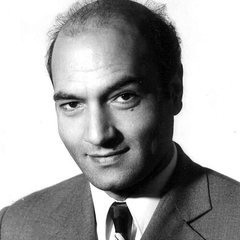
Necmettin Erbakan (29 October 1926, Sinop – 27 February 2011, Ankara) was a Turkish engineer and politician, founder of the Millî Görüş (National View) movement and prime minister of Turkey in 1996–1997. For four decades he led a line of Islamic parties that the secular state closed one after another, and Recep Tayyip Erdoğan and Abdullah Gül, who led Turkey after 2002, began their careers in his parties. [1][2]
Life and engineering career
He was the son of Mehmet Sabri, a criminal-court judge, and Kamer Hanım, and grew up in the towns where his father served. After İstanbul Erkek Lisesi he graduated in mechanical engineering from Istanbul Technical University in 1948 and stayed on as an assistant. In 1951 the university sent him to RWTH Aachen, where he took his doctorate in about a year and a half with a thesis on fuel economy in engines; he then did research at the Deutz engine works, including on engines for the Leopard tank. Back in Istanbul he became, at 27, the youngest associate professor in Turkey (1953), and full professor in 1965. In 1956 he founded Gümüş Motor, a company of some two hundred partners that built the first Turkish-made engine. In 1969 he was elected head of the Union of Chambers and Commodity Exchanges, but was removed by police on the government’s orders. [1][2]
Politics
He entered parliament in 1969 as an independent for Konya and in January 1970 founded the National Order Party, which the Constitutional Court closed in 1971 for acting against secularism. Its successor, the National Salvation Party, joined Bülent Ecevit’s government in 1974, the year of the Cyprus operation, and he served as deputy prime minister in that and the later Nationalist Front governments. After the 1980 coup he was detained and tried, then acquitted in 1983, and banned from politics until a referendum lifted the ban in 1987. [1]
As leader of the Welfare Party he came first in the December 1995 election and in July 1996 became prime minister in coalition with Tansu Çiller’s True Path Party. He sought closer ties with the Muslim world, proposed an Islamic currency and security body, and in 1997 set up the D-8 group of developing Muslim countries. His visit to Libya, where Muammar Gaddafi publicly rebuked Turkey at their joint press conference, embarrassed him at home, and he was widely blamed for mocking the protests over the Susurluk scandal. Under pressure from the army in the “28 February” process of 1997, often called a postmodern coup, his government resigned. The Welfare Party was closed in January 1998 and he was banned from politics for five years; in the “lost trillion” case over the party’s finances he was sentenced to two years and four months, served under house arrest, and was pardoned by President Abdullah Gül in 2008. [1][2]
When the movement split in 2001, his followers formed the Felicity Party, which he led in 2003–2004 and again from 2010 until his death, while the reformers around Recep Tayyip Erdoğan and Abdullah Gül founded the AKP. He belonged to the Naqshbandi order, through the İskenderpaşa community. He died in Ankara in 2011 and was buried in Istanbul after a funeral at the Fatih Mosque; he had asked not to have a state funeral. [1][2]
Ideas and writings
Millî Görüş, first set out in a 1969 manifesto and in his book of that name (1975), held that Turkey could rise by its own strength through heavy industry while keeping its faith, under the motto “morality and spirituality first”, and that its future lay with the Muslim world rather than in the European Community. He opposed the West and Zionism, spoke for Islamic unity, and from the 1980s presented his programme as the Adil Düzen (Just Order): an economy based on production and profit-sharing without interest, offered as an alternative to both capitalism and socialism. His view that European and Islamic civilisations were incompatible also brought him a friendship with the French far-right leader Jean-Marie Le Pen. [1][2][5]
His books are mostly lectures, speeches and party documents: Üç Konferans (1974), Millî Görüş (1975), Türkiye’nin Temel Meseleleri, Adil Ekonomik Düzen and Körfez Krizi, Emperyalizm ve Petrol (all 1991), and the Welfare Party’s defence in its closure case (1997). Yeni Bir Dünya ve Adil Düzen sets out the Just Order, and Davam (My Cause) gathers his main themes; his collected writings were published as the Erbakan Külliyatı. [1][3][4]
References
Nazım Maviş, “Erbakan, Necmettin”, TDV İslâm Ansiklopedisi, Ek-1 (2nd edition, Ankara, 2020), pp. 411–413. islamansiklopedisi.org.tr
“Millî Görüş Hareketi Bibliyografyası: Bibliyografya, Etki ve Yansımalar”, Muş Alparslan University academic archive. akademikarsiv.alparslan.edu.tr
Thesis on Erbakan’s Just Economic Order (Adil Ekonomik Düzen), YÖK Açık Bilim. acikbilim.yok.gov.tr
Primary sources: the TDV İslâm Ansiklopedisi article and his Wikipedia article, with Open Library for his books. Archived copies: the TDV İslâm Ansiklopedisi article (Wayback Machine copy of 24 July 2026: web.archive.org); the Wikipedia article (Wayback Machine copy of 17 August 2026: web.archive.org).
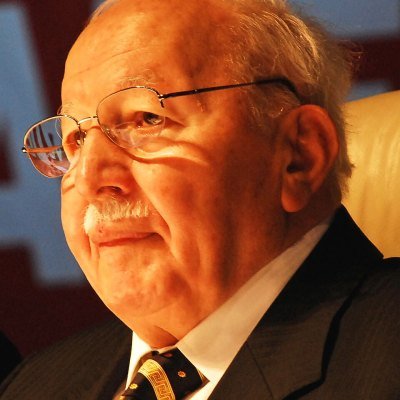
Photo: Zest at Turkish Wikipedia, CC BY-SA 3.0, via Wikimedia Commons (File:Necmettin Erbakan (cropped).jpg).
Checked: 8 November 2026. Biography compiled and added to this archive: 8 November 2026.
Recep Tayyip ErdoğanHe rose in Erbakan's Welfare Party (Istanbul chairman, then mayor) and broke with him in 2001 to found the AKP, while Erbakan's followers founded the Felicity Party. Wikipedia ↗
Family
None recorded yet
Worked together
None recorded yet
Argued with
None recorded yet
Parallel projects
None recorded yet
Archived 23 October 2026 · Sources: the Wikipedia article of each author and the biographies on this site. Whole network
Three lectures: Islam and Science (İslâm ve İlim), Women in the East, the West and Islam, and Our Cause of Industry (Fetih Yayınevi). İslâm ve İlim was reprinted on its own in 1993.
Erbakan, Necmettin. Üç Konferans. 1974. Archived 8 November 2026 in Islamic Internet Archives: Archive of Modern Islamic Thought. https://islamicarchives.org/works/necmettin-erbakan-uc-konferans-tr/
Erbakan, Necmettin. Millî Görüş. 1975. Archived 8 November 2026 in Islamic Internet Archives: Archive of Modern Islamic Thought. https://islamicarchives.org/works/necmettin-erbakan-milli-gorus-tr/
Erbakan, Necmettin. Adil Ekonomik Düzen. 1991. Archived 8 November 2026 in Islamic Internet Archives: Archive of Modern Islamic Thought. https://islamicarchives.org/works/necmettin-erbakan-adil-ekonomik-duzen-tr/
Erbakan, Necmettin. Kenan Evren'in Anılarındaki Yanılgılar. 1991. Archived 8 November 2026 in Islamic Internet Archives: Archive of Modern Islamic Thought. https://islamicarchives.org/works/necmettin-erbakan-kenan-evren-in-anilarindaki-yanilgilar-tr/
Erbakan, Necmettin. Körfez Krizi, Emperyalizm ve Petrol. 1991. Archived 8 November 2026 in Islamic Internet Archives: Archive of Modern Islamic Thought. https://islamicarchives.org/works/necmettin-erbakan-korfez-krizi-emperyalizm-ve-petrol-tr/
Erbakan, Necmettin. Türkiye'nin Temel Meseleleri. 1991. Archived 8 November 2026 in Islamic Internet Archives: Archive of Modern Islamic Thought. https://islamicarchives.org/works/necmettin-erbakan-turkiye-nin-temel-meseleleri-tr/
Erbakan, Necmettin. Refah Partisi Savunması. 1997. Archived 8 November 2026 in Islamic Internet Archives: Archive of Modern Islamic Thought. https://islamicarchives.org/works/necmettin-erbakan-refah-partisi-savunmasi-tr/
Erbakan, Necmettin. Yeni Bir Dünya ve Adil Düzen. 2010. Archived 8 November 2026 in Islamic Internet Archives: Archive of Modern Islamic Thought. https://islamicarchives.org/works/necmettin-erbakan-yeni-bir-dunya-ve-adil-duzen-tr/
My cause: his main themes in nine parts, from creation and Islam to Islamic unity, Cyprus, education, industry and the Just Order (published after his death).
Erbakan, Necmettin. Davam. 2013. Archived 8 November 2026 in Islamic Internet Archives: Archive of Modern Islamic Thought. https://islamicarchives.org/works/necmettin-erbakan-davam-tr/
Erbakan, Necmettin. Erbakan Külliyatı. 2013. Archived 8 November 2026 in Islamic Internet Archives: Archive of Modern Islamic Thought. https://islamicarchives.org/works/necmettin-erbakan-erbakan-kulliyati-tr/
Erbakan, Necmettin. İslam Birliği. 2017. Archived 8 November 2026 in Islamic Internet Archives: Archive of Modern Islamic Thought. https://islamicarchives.org/works/necmettin-erbakan-islam-birligi-tr/
Erbakan, Necmettin. Mecliste Ortak Pazar. 1971. Archived 8 November 2026 in Islamic Internet Archives: Archive of Modern Islamic Thought. https://islamicarchives.org/works/necmettin-erbakan-mecliste-ortak-pazar-tr/
Erbakan, Necmettin. Mecliste Millî Görüş Açısından Üçüncü Beş Yıllık Plan'ın Tenkidi. 1973. Archived 8 November 2026 in Islamic Internet Archives: Archive of Modern Islamic Thought. https://islamicarchives.org/works/necmettin-erbakan-mecliste-milli-gorus-acisindan-ucuncu-bes-yillik-plan-in-tenkidi-tr/
Engineer and professor; founder of the Millî Görüş movement; prime minister of Turkey (1996–1997) · 1926–2011
At a glance
Born: 1926
Died: 2011 (aged 85)
Countries: Türkiye
Known for: Engineer and professor; founder of the Millî Görüş movement; prime minister of Turkey (1996–1997)
Era: Post-Caliphate Era (1924–1947); Revival & Independence (1947–1979); Global Islamic Resurgence (1979–2000); Contemporary Islam (2000–today)
Subjects: Political thought, Economics, Islam and modernity, Science and religion, Women and gender
Works in this archive: 13
Necmettin Erbakan (29 October 1926, Sinop – 27 February 2011, Ankara) was a Turkish engineer and politician, founder of the Millî Görüş (National View) movement and prime minister of Turkey in 1996–1997. For four decades he led a line of Islamic parties that the secular state closed one after another, and Recep Tayyip Erdoğan and Abdullah Gül, who led Turkey after 2002, began their careers in his parties. [1][2]
Life and engineering career
He was the son of Mehmet Sabri, a criminal-court judge, and Kamer Hanım, and grew up in the towns where his father served. After İstanbul Erkek Lisesi he graduated in mechanical engineering from Istanbul Technical University in 1948 and stayed on as an assistant. In 1951 the university sent him to RWTH Aachen, where he took his doctorate in about a year and a half with a thesis on fuel economy in engines; he then did research at the Deutz engine works, including on engines for the Leopard tank. Back in Istanbul he became, at 27, the youngest associate professor in Turkey (1953), and full professor in 1965. In 1956 he founded Gümüş Motor, a company of some two hundred partners that built the first Turkish-made engine. In 1969 he was elected head of the Union of Chambers and Commodity Exchanges, but was removed by police on the government’s orders. [1][2]
Politics
He entered parliament in 1969 as an independent for Konya and in January 1970 founded the National Order Party, which the Constitutional Court closed in 1971 for acting against secularism. Its successor, the National Salvation Party, joined Bülent Ecevit’s government in 1974, the year of the Cyprus operation, and he served as deputy prime minister in that and the later Nationalist Front governments. After the 1980 coup he was detained and tried, then acquitted in 1983, and banned from politics until a referendum lifted the ban in 1987. [1]
As leader of the Welfare Party he came first in the December 1995 election and in July 1996 became prime minister in coalition with Tansu Çiller’s True Path Party. He sought closer ties with the Muslim world, proposed an Islamic currency and security body, and in 1997 set up the D-8 group of developing Muslim countries. His visit to Libya, where Muammar Gaddafi publicly rebuked Turkey at their joint press conference, embarrassed him at home, and he was widely blamed for mocking the protests over the Susurluk scandal. Under pressure from the army in the “28 February” process of 1997, often called a postmodern coup, his government resigned. The Welfare Party was closed in January 1998 and he was banned from politics for five years; in the “lost trillion” case over the party’s finances he was sentenced to two years and four months, served under house arrest, and was pardoned by President Abdullah Gül in 2008. [1][2]
When the movement split in 2001, his followers formed the Felicity Party, which he led in 2003–2004 and again from 2010 until his death, while the reformers around Recep Tayyip Erdoğan and Abdullah Gül founded the AKP. He belonged to the Naqshbandi order, through the İskenderpaşa community. He died in Ankara in 2011 and was buried in Istanbul after a funeral at the Fatih Mosque; he had asked not to have a state funeral. [1][2]
Ideas and writings
Millî Görüş, first set out in a 1969 manifesto and in his book of that name (1975), held that Turkey could rise by its own strength through heavy industry while keeping its faith, under the motto “morality and spirituality first”, and that its future lay with the Muslim world rather than in the European Community. He opposed the West and Zionism, spoke for Islamic unity, and from the 1980s presented his programme as the Adil Düzen (Just Order): an economy based on production and profit-sharing without interest, offered as an alternative to both capitalism and socialism. His view that European and Islamic civilisations were incompatible also brought him a friendship with the French far-right leader Jean-Marie Le Pen. [1][2][5]
His books are mostly lectures, speeches and party documents: Üç Konferans (1974), Millî Görüş (1975), Türkiye’nin Temel Meseleleri, Adil Ekonomik Düzen and Körfez Krizi, Emperyalizm ve Petrol (all 1991), and the Welfare Party’s defence in its closure case (1997). Yeni Bir Dünya ve Adil Düzen sets out the Just Order, and Davam (My Cause) gathers his main themes; his collected writings were published as the Erbakan Külliyatı. [1][3][4]
References
Nazım Maviş, “Erbakan, Necmettin”, TDV İslâm Ansiklopedisi, Ek-1 (2nd edition, Ankara, 2020), pp. 411–413. islamansiklopedisi.org.tr
“Millî Görüş Hareketi Bibliyografyası: Bibliyografya, Etki ve Yansımalar”, Muş Alparslan University academic archive. akademikarsiv.alparslan.edu.tr
Thesis on Erbakan’s Just Economic Order (Adil Ekonomik Düzen), YÖK Açık Bilim. acikbilim.yok.gov.tr
Primary sources: the TDV İslâm Ansiklopedisi article and his Wikipedia article, with Open Library for his books. Archived copies: the TDV İslâm Ansiklopedisi article (Wayback Machine copy of 24 July 2026: web.archive.org); the Wikipedia article (Wayback Machine copy of 17 August 2026: web.archive.org).
Photo: Zest at Turkish Wikipedia, CC BY-SA 3.0, via Wikimedia Commons (File:Necmettin Erbakan (cropped).jpg).
Checked: 8 November 2026. Biography compiled and added to this archive: 8 November 2026.
Connections
Influenced
Recep Tayyip Erdoğan — He rose in Erbakan's Welfare Party (Istanbul chairman, then mayor) and broke with him in 2001 to found the AKP, while Erbakan's followers founded the Felicity Party.