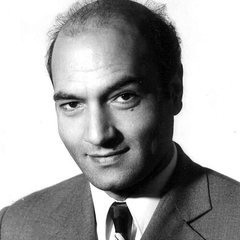
ʿAlī Sharīʿatī was born in 1933 in Mazinan, near Sabzevar in north-eastern Iran. His father, Muḥammad-Taqī Sharīʿatī, was a reform-minded religious teacher in Mashhad who ran a centre for propagating Islamic teachings, and the son grew up in a milieu that combined religious learning with anti-monarchist politics. He trained as a teacher, graduated from the University of Mashhad, and joined the nationalist opposition, which brought him the first of several arrests.
In 1959 he went to Paris on a scholarship and in 1964 received a doctorate in Persian philology. His years in France mattered more for what he read and heard outside his field: the Islamicist Louis Massignon, the sociologist Georges Gurvitch, existentialist debates, and especially the anticolonial writing of Frantz Fanon, whom he translated. He also took part in Algerian and Iranian student activism.
Back in Iran he taught at Mashhad University and, from the late 1960s, lectured at the Ḥusayniyya-yi Irshād in Tehran to very large audiences of students. In books and lectures such as Islamology, Return to the Self, Red Shi’ism vs. Black Shi’ism and Fatima Is Fatima, he reinterpreted Shiʿism as a revolutionary ideology of justice, criticised both clerical conservatism and Westernised secularism, and assigned leadership to the socially committed ‘enlightened thinker’. His vocabulary of martyrdom, authenticity and protest became one of the main ideological currents behind the 1979 revolution, though many clerics, including Murtaḍā Muṭahharī, rejected his readings.
The Irshād was closed in 1972 and Sharīʿatī spent about eighteen months in prison before release in 1975. Allowed to leave Iran in 1977, he died suddenly in Southampton, England, in June of that year; his supporters suspected the Shah’s security service. He is buried in Damascus near the shrine of Sayyida Zaynab.