Murad Wilfried Hofmann (6 July 1931 – 12 January 2020) was a German diplomat and Muslim writer whose books on Islam’s place in Europe and America were widely translated. The Muslim 500 listed him in 2009 and 2012 as an intellectual respected by Muslims and non-Muslims alike. [1][2]
Born in Aschaffenburg into a Catholic family related to the Dada pioneer Hugo Ball, he studied at Harvard and served in the German Foreign Service from 1961 to 1994: first in Algeria, where the war of independence left a deep mark on him, then as NATO’s Director of Information in Brussels (1983–1987) and as ambassador to Algeria (1987–1990) and Morocco (1990–1994). He became Muslim in 1980, citing what he had seen in Algeria, his love of Islamic art and his doubts about Pauline Christian doctrine. Because of his senior position in the German government, his conversion caused some controversy. [1]
His books include Diary of a German Muslim (1985), Islam: The Alternative (1992), Journey to Makkah (1996) and Islam in the Third Millennium (2000), and he revised Max Henning’s German translation of the Qur’an. He was an honorary member and adviser of the Central Council of Muslims in Germany and a signatory of A Common Word Between Us and You (2007). [1][3]
“Murad Wilfried Hofmann”, works in Open Library. openlibrary.org
Primary sources: the Muslim 500 entries and the Wikipedia article. Archived copies: the Wikipedia article (Wayback Machine copy of 11 September 2025: web.archive.org).
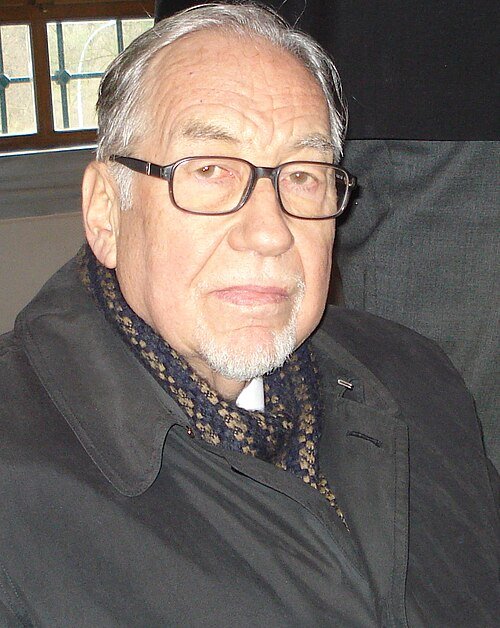
Photo: Tarawneh, CC BY-SA 4.0, via Wikimedia Commons (File:Murad Wilfried Hofmann (cropped).JPG).
Checked: 6 November 2026. Biography compiled and added to this archive: 6 November 2026.
Hofmann, Murad Wilfried. Tagebuch eines deutschen Muslims. 1985. Archived 6 November 2026 in Islamic Internet Archives: Archive of Modern Islamic Thought. https://islamicarchives.org/works/murad-hofmann-tagebuch-eines-deutschen-muslims-de/
Hofmann, Murad Wilfried. Islam: The Alternative. 1992. Archived 6 November 2026 in Islamic Internet Archives: Archive of Modern Islamic Thought. https://islamicarchives.org/works/murad-hofmann-islam-the-alternative-en/
Hofmann, Murad Wilfried. Journey to Makkah. 1996. Archived 6 November 2026 in Islamic Internet Archives: Archive of Modern Islamic Thought. https://islamicarchives.org/works/murad-hofmann-journey-to-makkah-en/
Hofmann, Murad Wilfried. Der Islam im 3. Jahrtausend. 2000. Archived 6 November 2026 in Islamic Internet Archives: Archive of Modern Islamic Thought. https://islamicarchives.org/works/murad-hofmann-der-islam-im-3-jahrtausend-de/
Known for: German diplomat (NATO Director of Information; Ambassador to Algeria and Morocco); author on Islam in the West
Era: Revival & Independence (1947–1979); Global Islamic Resurgence (1979–2000); Contemporary Islam (2000–today)
Subjects: Islam and modernity
Works in this archive: 4
Murad Wilfried Hofmann (6 July 1931 – 12 January 2020) was a German diplomat and Muslim writer whose books on Islam’s place in Europe and America were widely translated. The Muslim 500 listed him in 2009 and 2012 as an intellectual respected by Muslims and non-Muslims alike. [1][2]
Born in Aschaffenburg into a Catholic family related to the Dada pioneer Hugo Ball, he studied at Harvard and served in the German Foreign Service from 1961 to 1994: first in Algeria, where the war of independence left a deep mark on him, then as NATO’s Director of Information in Brussels (1983–1987) and as ambassador to Algeria (1987–1990) and Morocco (1990–1994). He became Muslim in 1980, citing what he had seen in Algeria, his love of Islamic art and his doubts about Pauline Christian doctrine. Because of his senior position in the German government, his conversion caused some controversy. [1]
His books include Diary of a German Muslim (1985), Islam: The Alternative (1992), Journey to Makkah (1996) and Islam in the Third Millennium (2000), and he revised Max Henning’s German translation of the Qur’an. He was an honorary member and adviser of the Central Council of Muslims in Germany and a signatory of A Common Word Between Us and You (2007). [1][3]
“Murad Wilfried Hofmann”, works in Open Library. openlibrary.org
Primary sources: the Muslim 500 entries and the Wikipedia article. Archived copies: the Wikipedia article (Wayback Machine copy of 11 September 2025: web.archive.org).
Photo: Tarawneh, CC BY-SA 4.0, via Wikimedia Commons (File:Murad Wilfried Hofmann (cropped).JPG).
Checked: 6 November 2026. Biography compiled and added to this archive: 6 November 2026.