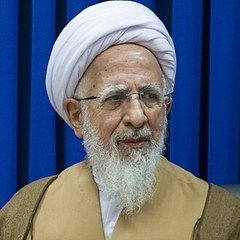
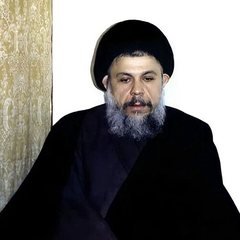
Grand Ayatollah Ali al-Husayni al-Sistani (born 4 August 1930 in Mashhad) is the senior scholar of the Shi’i seminary (hawza) of Najaf and the most widely followed religious authority (marja’) among Twelver Shi’a worldwide. The Muslim 500 has ranked him near the top of every edition, and Time named him among the world’s hundred most influential people in 2004 and 2005. [1][2]
Scholar
Born into a family of clerics of sayyid descent, he studied in Mashhad and in Qom under Ayatollah Borujerdi, then from 1951 in Najaf under Abu al-Qasim al-Khu’i, reaching the rank of mujtahid in 1960. After al-Khu’i died in 1992 and his successor Abd al-A’la al-Sabziwari in 1993, Sistani was recognised as the leading marja’ of Najaf; he led al-Khu’i’s funeral prayers. His works include the practical legal manual Minhaj al-salihin, its Persian counterpart Tawzih al-masa’il, works on legal theory such as al-Rafid fi ‘ilm al-usul, and al-Fiqh lil-mughtaribin, rulings for Muslims living in the West. [1][3]
Public role
He has kept out of day-to-day politics and favoured democratic government over the Iranian model of rule by the jurist (wilayat al-faqih). After the 2003 invasion he pressed the occupying powers for an elected constitutional assembly and urged Iraqis to vote in January 2005; observers noted that this route also led to Shi’i political dominance. In June 2014, as the Islamic State advanced on Baghdad, he issued a fatwa calling on citizens to defend the country,. During the 2019–2021 protests he held the government responsible for the killing of protesters. On 6 March 2021 he received Pope Francis at his home in Najaf. [1]
“ʻAlī al-Ḥusaynī Sīstānī”, works in Open Library. openlibrary.org
Primary sources: the Muslim 500 entries and the Wikipedia article. Archived copies: the Wikipedia article (Wayback Machine copy of 8 October 2026: web.archive.org).
Photo: IsaKazimi (talk), Public domain, via Wikimedia Commons (File:Ali Sistani edit1.jpg).
Checked: 6 November 2026. Biography compiled and added to this archive: 6 November 2026.
al-Sistani, Ali. Minhaj al-salihin. 1993. Archived 6 November 2026 in Islamic Internet Archives: Archive of Modern Islamic Thought. https://islamicarchives.org/works/ali-al-sistani-minhaj-al-salihin-ar/
al-Sistani, Ali. Qa'idat la darar wa-la dirar. 1993. Archived 6 November 2026 in Islamic Internet Archives: Archive of Modern Islamic Thought. https://islamicarchives.org/works/ali-al-sistani-qa-idat-la-darar-wa-la-dirar-ar/
al-Sistani, Ali. Al-Rafid fi 'ilm al-usul. 1994. Archived 6 November 2026 in Islamic Internet Archives: Archive of Modern Islamic Thought. https://islamicarchives.org/works/ali-al-sistani-al-rafid-fi-ilm-al-usul-ar/
al-Sistani, Ali. Tawzih al-masa'il. 1997. Archived 6 November 2026 in Islamic Internet Archives: Archive of Modern Islamic Thought. https://islamicarchives.org/works/ali-al-sistani-tawzih-al-masa-il-fa/
al-Sistani, Ali. Al-Fiqh lil-mughtaribin. 1998. Archived 6 November 2026 in Islamic Internet Archives: Archive of Modern Islamic Thought. https://islamicarchives.org/works/ali-al-sistani-al-fiqh-lil-mughtaribin-ar/
Known for: Grand Ayatollah and marja' al-taqlid; senior authority of the Najaf hawza
Era: Revival & Independence (1947–1979); Global Islamic Resurgence (1979–2000); Contemporary Islam (2000–today)
Subjects: Islamic law
Works in this archive: 5
Grand Ayatollah Ali al-Husayni al-Sistani (born 4 August 1930 in Mashhad) is the senior scholar of the Shi’i seminary (hawza) of Najaf and the most widely followed religious authority (marja’) among Twelver Shi’a worldwide. The Muslim 500 has ranked him near the top of every edition, and Time named him among the world’s hundred most influential people in 2004 and 2005. [1][2]
Scholar
Born into a family of clerics of sayyid descent, he studied in Mashhad and in Qom under Ayatollah Borujerdi, then from 1951 in Najaf under Abu al-Qasim al-Khu’i, reaching the rank of mujtahid in 1960. After al-Khu’i died in 1992 and his successor Abd al-A’la al-Sabziwari in 1993, Sistani was recognised as the leading marja’ of Najaf; he led al-Khu’i’s funeral prayers. His works include the practical legal manual Minhaj al-salihin, its Persian counterpart Tawzih al-masa’il, works on legal theory such as al-Rafid fi ‘ilm al-usul, and al-Fiqh lil-mughtaribin, rulings for Muslims living in the West. [1][3]
Public role
He has kept out of day-to-day politics and favoured democratic government over the Iranian model of rule by the jurist (wilayat al-faqih). After the 2003 invasion he pressed the occupying powers for an elected constitutional assembly and urged Iraqis to vote in January 2005; observers noted that this route also led to Shi’i political dominance. In June 2014, as the Islamic State advanced on Baghdad, he issued a fatwa calling on citizens to defend the country,. During the 2019–2021 protests he held the government responsible for the killing of protesters. On 6 March 2021 he received Pope Francis at his home in Najaf. [1]
“ʻAlī al-Ḥusaynī Sīstānī”, works in Open Library. openlibrary.org
Primary sources: the Muslim 500 entries and the Wikipedia article. Archived copies: the Wikipedia article (Wayback Machine copy of 8 October 2026: web.archive.org).
Photo: IsaKazimi (talk), Public domain, via Wikimedia Commons (File:Ali Sistani edit1.jpg).
Checked: 6 November 2026. Biography compiled and added to this archive: 6 November 2026.