Skip to content
Amina Wadud

Amina Wadud

b. 1952 · United States / Malaysia · Qur'anic exegete, theologian, Islamic feminist scholar

Amina Wadud was born Mary Teasley on 25 September 1952 in Bethesda, Maryland, the daughter of a Methodist minister. She embraced Islam in 1972 while studying at the University of Pennsylvania, where she earned a degree in education, and later adopted the name amina wadud, often written in lower case. She took a master’s degree and, in 1988, a doctorate in Arabic and Islamic studies at the University of Michigan, and studied Arabic, Qur’anic exegesis and philosophy in Cairo, including at Cairo University and al-Azhar.

From 1989 to 1992 she taught Qur’anic studies at the International Islamic University Malaysia, where she published her dissertation as Qur’an and Woman (1992) and helped found the advocacy group Sisters in Islam. She then taught religion and philosophy at Virginia Commonwealth University until her retirement, later holding visiting posts at Starr King School for the Ministry, Gadjah Mada University in Yogyakarta and elsewhere.

Wadud’s central argument is that the Qur’an, read holistically and in light of the principle of divine unity (tawhid), affirms the full moral and spiritual equality of women and men, and that patriarchal outcomes stem from male-dominated interpretation rather than revelation. Qur’an and Woman became a foundational text of Islamic feminist exegesis. In Inside the Gender Jihad (2006) she joined theology with personal narrative, discussing among other things her 1994 sermon in Cape Town and the mixed-gender Friday prayer she led in New York in March 2005, an event that drew both support and strong criticism across the Muslim world.

She has also written on race, African American Islam and family law reform, contributed to the Musawah movement’s publications, and published a spiritual memoir, Once in a Lifetime (2022). She remains a central and contested figure in debates on gender and authority in Islam.
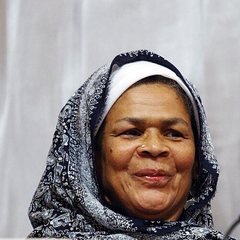
Photo: Oregon State University, CC BY-SA 2.0, via Wikimedia Commons

Archived 14 October 2026 · Biography sources: en.wikipedia.org · muslimsocieties.org · musawah.org

Teachers

None recorded yet

Students

None recorded yet

Influenced by

  • Fazlur RahmanWadud's Qur'an and Woman builds on Rahman's method of reading the Qurʾān as a coherent ethical whole.

Influenced

None recorded yet

Family

None recorded yet

Worked together

None recorded yet

Argued with

Parallel projects

  • Asma LamrabetAsma Lamrabet's article compares her with Amina Wadud for a shared belief about interpretations underlying Islamic law. Wikipedia ↗

Archived 23 October 2026 · Sources: the Wikipedia article of each author and the biographies on this site. Whole network

In their lifetime, in the History Hub:New states and revivalRevolution and renewalContemporary voices

Works

Books 3

BOOK 1992 · English
Qur'an and Woman: Rereading the Sacred Text from a Woman's Perspective

Based on her doctoral research, a gender-inclusive reading of Qur'anic passages on creation, the afterlife and women's roles, arguing that the text affirms the equal moral worth of women and men.

Archived 14 October 2026 · Source: archive.org

Cite

Wadud, Amina. Qur'an and Woman: Rereading the Sacred Text from a Woman's Perspective. 1992. Archived 14 October 2026 in Islamic Internet Archives: Archive of Modern Islamic Thought. https://islamicarchives.org/authors/amina-wadud/#amina-wadud-quran-and-woman-rereading-the-sacred-text-from

No free copy online
BOOK 2006 · English
Inside the Gender Jihad: Women's Reform in Islam

Combines autobiography and theology to describe the struggle for gender justice in Muslim communities, including her 2005 leadership of mixed-gender Friday prayer.

Archived 14 October 2026 · Source: archive.org

Cite

Wadud, Amina. Inside the Gender Jihad: Women's Reform in Islam. 2006. Archived 14 October 2026 in Islamic Internet Archives: Archive of Modern Islamic Thought. https://islamicarchives.org/authors/amina-wadud/#amina-wadud-inside-the-gender-jihad-womens-reform-in-islam

No free copy online
MEMOIR 2022 · English
Once in a Lifetime

A spiritual memoir that introduces the five pillars of Islam from a progressive, gender-inclusive perspective.

Archived 14 October 2026 · Source: newbooksnetwork.com

Cite

Wadud, Amina. Once in a Lifetime. 2022. Archived 14 October 2026 in Islamic Internet Archives: Archive of Modern Islamic Thought. https://islamicarchives.org/authors/amina-wadud/#amina-wadud-once-in-a-lifetime

No free copy online

Articles & essays 1

ESSAY 2002 · English
Aishah's Legacy: The Struggle for Women's Rights within Islam

Short essay invoking the example of Aisha to argue for women's rights from within the Islamic tradition; reprinted in The New Voices of Islam (2006).

Archived 14 October 2026 · Source: not yet recorded

Cite

Wadud, Amina. Aishah's Legacy: The Struggle for Women's Rights within Islam. 2002. Archived 14 October 2026 in Islamic Internet Archives: Archive of Modern Islamic Thought. https://islamicarchives.org/authors/amina-wadud/#amina-wadud-aishahs-legacy-the-struggle-for-womens-rights-within

No free copy online

Papers 7

PAPER 1995 · English
Towards a Qur'anic Hermeneutics of Social Justice: Race, Class and Gender

Journal article proposing a Qur'anic hermeneutic centred on justice that addresses race and class alongside gender.

Archived 14 October 2026 · Source: cambridge.org

Cite

Wadud, Amina. Towards a Qur'anic Hermeneutics of Social Justice: Race, Class and Gender. 1995. Archived 14 October 2026 in Islamic Internet Archives: Archive of Modern Islamic Thought. https://islamicarchives.org/authors/amina-wadud/#amina-wadud-towards-a-quranic-hermeneutics-of-social-justice-race

No free copy online
CHAPTER 2000 · English
Alternative Qur'anic Interpretation and the Status of Muslim Women

Chapter in the volume Windows of Faith (ed. Gisela Webb) on how alternative readings of the Qur'an can reshape the status of Muslim women.

Archived 14 October 2026 · Source: not yet recorded

Cite

Wadud, Amina. Alternative Qur'anic Interpretation and the Status of Muslim Women. 2000. Archived 14 October 2026 in Islamic Internet Archives: Archive of Modern Islamic Thought. https://islamicarchives.org/authors/amina-wadud/#amina-wadud-alternative-quranic-interpretation-and-the-status-of-muslim

No free copy online
CHAPTER 2003 · English
American Muslim Identity: Race and Ethnicity in Progressive Islam

Chapter in Progressive Muslims (ed. Omid Safi) on race, ethnicity and African American experience within American Islam.

Archived 14 October 2026 · Source: not yet recorded

Cite

Wadud, Amina. American Muslim Identity: Race and Ethnicity in Progressive Islam. 2003. Archived 14 October 2026 in Islamic Internet Archives: Archive of Modern Islamic Thought. https://islamicarchives.org/authors/amina-wadud/#amina-wadud-american-muslim-identity-race-and-ethnicity-in-progressive

No free copy online
CHAPTER 2005 · English
Citizenship and Faith

Chapter in Women and Citizenship (ed. Marilyn Friedman) reflecting on Muslim women's citizenship and religious identity.

Archived 14 October 2026 · Source: not yet recorded

Cite

Wadud, Amina. Citizenship and Faith. 2005. Archived 14 October 2026 in Islamic Internet Archives: Archive of Modern Islamic Thought. https://islamicarchives.org/authors/amina-wadud/#amina-wadud-citizenship-and-faith

No free copy online
CHAPTER 2009 · English
Islam Beyond Patriarchy Through Gender Inclusive Qur'anic Analysis

Contribution to Musawah's founding volume arguing from the Qur'an's principle of tawhid that gender equality is integral to Islam.

Archived 14 October 2026 · Source: Musawah (free PDF of the full volume)

Cite

Wadud, Amina. Islam Beyond Patriarchy Through Gender Inclusive Qur'anic Analysis. 2009. Musawah (free PDF of the full volume), https://www.musawah.org/wp-content/uploads/2018/11/MusawahWanted_En.pdf. Archived 14 October 2026 in Islamic Internet Archives: Archive of Modern Islamic Thought. https://islamicarchives.org/authors/amina-wadud/#amina-wadud-islam-beyond-patriarchy-through-gender-inclusive-quranic-analysis

CHAPTER 2015 · English
The Ethics of Tawhid over the Ethics of Qiwamah

Chapter in Men in Charge? Rethinking Authority in Muslim Legal Tradition arguing that the ethics of divine unity should override the doctrine of male guardianship (qiwamah).

Archived 14 October 2026 · Source: not yet recorded

Cite

Wadud, Amina. The Ethics of Tawhid over the Ethics of Qiwamah. 2015. Archived 14 October 2026 in Islamic Internet Archives: Archive of Modern Islamic Thought. https://islamicarchives.org/authors/amina-wadud/#amina-wadud-the-ethics-of-tawhid-over-the-ethics-of

No free copy online
PAPER 2021 · English
Reflections on Islamic Feminist Exegesis of the Qur'an

Open-access article reflecting on the development, methods and future of Islamic feminist interpretation of the Qur'an.

Archived 14 October 2026 · Source: Religions (MDPI, open access)

Cite

Wadud, Amina. Reflections on Islamic Feminist Exegesis of the Qur'an. 2021. Religions (MDPI, open access), https://www.mdpi.com/2077-1444/12/7/497. Archived 14 October 2026 in Islamic Internet Archives: Archive of Modern Islamic Thought. https://islamicarchives.org/authors/amina-wadud/#amina-wadud-reflections-on-islamic-feminist-exegesis-of-the-quran